
Sergiu Simmel, Business Growth Coach and AI Consulting

 iHeartRadio iHeartRadio
 Spotify Spotify
 Amazon Music Amazon Music
 Apple Podcasts Apple Podcasts
 Pandora Pandora
 Youtube Music Youtube Music
 Podchaser Podchaser
 Deezer Deezer
 Audible Audible
 Spreaker Spreaker
 Audacy Audacy
 Podcast Addict Podcast Addict
 Castbox Castbox
 JioSaavn JioSaavn
 TuneIn TuneIn
 Castamatic Castamatic
 Castro Castro
 Fountain Fountain
 Goodpods Goodpods
 Overcast Overcast
 PlayerFM PlayerFM
 PocketCasts PocketCasts
 Podimo Podimo
 Podurama Podurama
 Podverse Podverse
 Podyssey Podyssey
 RSS Feed RSS Feed iHeartRadio iHeartRadio Spotify Spotify Amazon Music Amazon Music Apple Podcasts Apple Podcasts Pandora Pandora Youtube Music Youtube Music Podchaser Podchaser Deezer Deezer Audible Audible Spreaker Spreaker Audacy Audacy Podcast Addict Podcast Addict Castbox Castbox JioSaavn JioSaavn TuneIn TuneIn Castamatic Castamatic Castro Castro Fountain Fountain Goodpods Goodpods Overcast Overcast PlayerFM PlayerFM PocketCasts PocketCasts Podimo Podimo Podurama Podurama Podverse Podverse Podyssey Podyssey RSS Feed RSS Feed
Sergiu Simmel guides founders, owners, CEOs of small-to-midsized businesses & their Leadership Teams on growing their business faster, easier and with more joy than they ever thought possible.
After founding 3 start-ups and a consulting practice, he shifted his focus towards business coaching, becoming the first EOS Implementer in New England.
In 2024, he immersed his work into the ever-changing world of Generative AI through partnerships with Humans+AI and WSI.
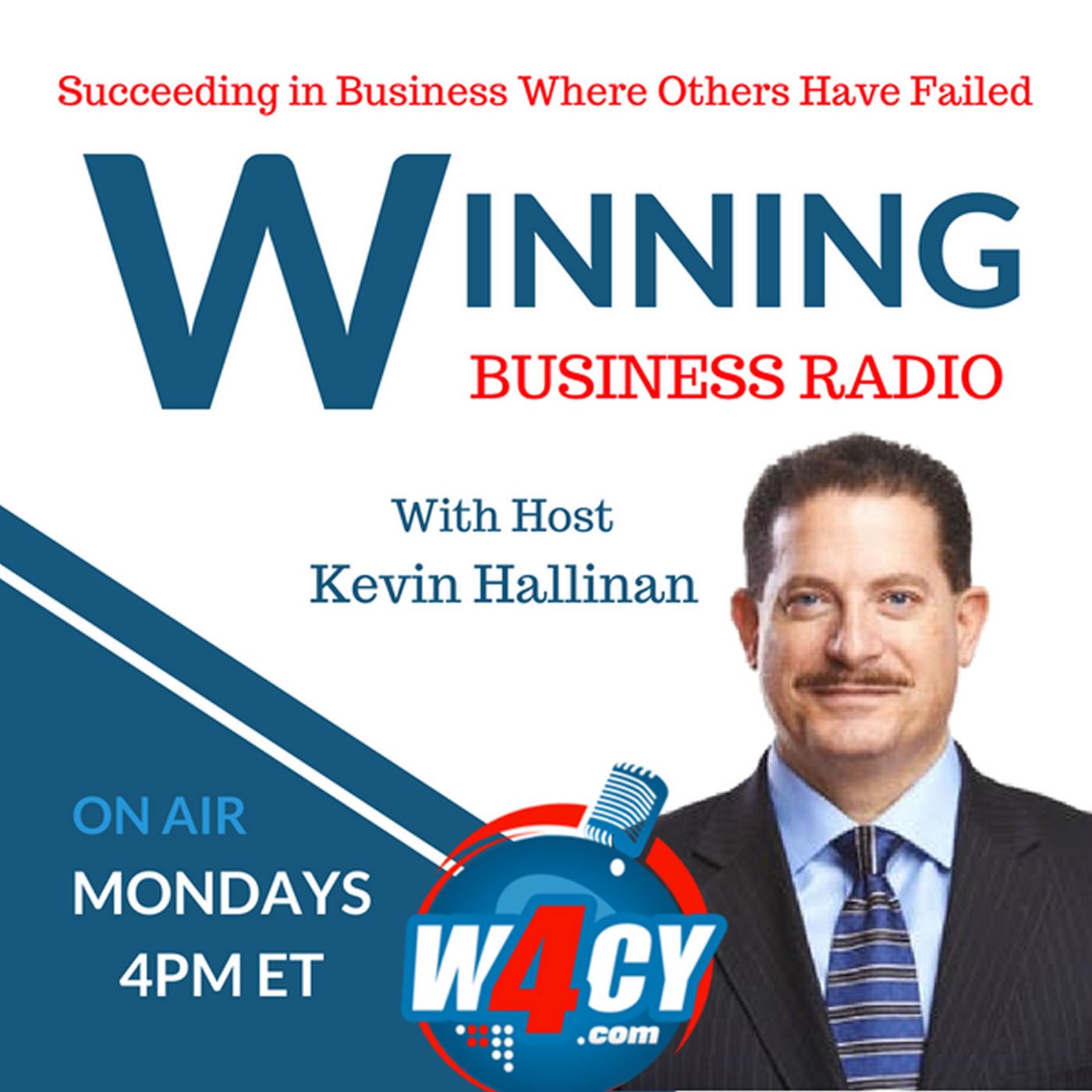
Winning Business Radio is broadcast live Mondays at 4PM ET and Music on W4CY Radio (www.w4cy.com) part of Talk 4 Radio (www.talk4radio.com) on the Talk 4 Media Network (www.talk4media.com). Winning Business Radio is viewed on Talk 4 TV (www.talk4tv.com).
Winning Business Radio Podcast is also available on Talk 4 Media (www.talk4media.com), Talk 4 Podcasting (www.talk4podcasting.com), iHeartRadio, Amazon Music, Pandora, Spotify, Audible, and over 100 other podcast outlets.
Become a supporter of this podcast: https://www.spreaker.com/podcast/winning-business-radio--3075598/support.
0:00 The topics and opinions express in the following show are solely those of the hosts and their guests, and not those of W FOURCY Radio. It's employees are affiliates. We make no recommendations or endorsements radio show, programs, services, or products mentioned on air or on our web. No liability explicitor implied shall be extended to W four CY Radio or it's employees are affiliates. Any questions or comments should be directed to those show hosts. Thank you for choosing W FOURCY Radio. Churchill said, those who failed to learn from history are condemned to repeat it. Kevin helen n believes that certainly applies to business. Welcome to Winning Business Radio here at W four CY Radio. That's W four cy dot com and now your host, Kevin Helena.
0:51 Thanks everybody for joining in again today. I'm Kevin Hallan and welcome back to Winning Business TV and Radio. We're on W four cy dot com. We're streaming live on talkfotv dot com. That's the number four, and we're streaming live on Facebook and YouTube at Winning Business Radio as well as we're available in podcast after the live show on pretty much wherever you get your wow blank your podcast content. The mission of Winning business radio and TV, as regular viewers and listeners know, is to offer insights and advice to help people avoid the mistakes of others, right to learn best practices. Those are the how tos, the what tos, the what not tos, to be challenged and hopefully to be inspired by the successes of others. Those are consultants, coaches, advisors, authors, founders and owners, entrepreneurs, people with expertise. But you know, virtually every successful person that I've ever talked to has had some form of failure in their lives and careers.
1:53 So I say this every week. While we all have to get our knees scraped once in a while, I'm driven to keep those scrapes from needing major surgery. Let's endeavor to learn from history so we don't repeat it. I've spent the better part of my career equipping businesses to grow, and that's from solopreneurs to small and medium sized companies all the way up to the fortune fifty. I've seen some of those companies win into varying degrees. I've seen some fail, and I've had the opportunity to rub elbows with some of the highest performing people around and with some who probably should have found other professions. And in my own businesses, I've had lots of success, but failures too, and I like to think I've learned a lot from those successes. So, yeah, you're going to hear from me, but you're going to hear from guests mostly, and today is no exception. My returning guest is Surgu Simmel business Coach, Growth Business growth coach.
2:39 I really can read. Here's his bio. Surg You Simmel guides founders, owners, CEOs of small to mid sized businesses and their leadership teams on growing their business faster, easier. And I love this with more joy than ever that was thought possible into the AI economy. He was born and grew up in in Bucharest, Romania. He spent his childhood years studying both music and mathematics. In nineteen eighty one, he defected from communist Romania and ended up in Minneapolis, Minnesota. We're going to hear about that. He started his career as a software technologist back in graduate school as a master's in computer science from the University of Minnesota. One of his two areas of focus was artificial intelligence in nineteen eighty one. In nineteen ninety one, Sergiu co founded his first startup, a software company that produced an advanced database server. In ninety five, he co founded his second business, providing technology based compliance services to the financial industry, before being sold about two decades later.
3:40 This company had grown to a thirty four million dollar business. In nineteen ninety eight, Surgiu created his own practice, serving as a fractional chief products officer for seven SaaS companies in a variety of industries. During this period, he founded his third startup, and e learning company that pioneered the use of telesseminars for providing educational comment and in twenty thirteen he shifted his focus toward business coaching, becoming the first EOS implementer in New England. Over the past thirteen years, he's worked with over seventy five businesses from twenty to one thousand people in size, several of whom ended up executing successful exits while starting with thes. Over time, Sergiu enlarged his toolbox to other business operating systems, including Pinnacle, Scaling Up and ninety OS, as well as a wide variety of other bolt on services. From Colby to red teaming, to executive coaching to positive intelligence. As a perpetual learner, Surgiu has acquired over ten such certifications. If you know him, that's no surprise. Since twenty twenty four four, excuse me, Sergiu has immersed his work into the rapidly changing world of generative AI, developing and delivering several services aimed at both upskilling business leaders in collaborating with AI, as well as working as an AI consultant, guiding small to medium sized businesses through their process of transforming them into AI forward companies through his partnerships with Humans plus AI and more recently with WSI, a Toronto based AI consulting and training company. Here's what the part I love. His professional
5:13 mission is to restore joy in humane performance for entrepreneurial leaders. His passion is to impact people into living meaningful, full expressed lives. He lives in the city of Boston. He's the proud father of two grown daughters. I love this too, and he's madly in love with his two grandsons. SERGEI, welcome to Winning Business Radio and TV, and thanks for being here. Thank you very much for having me again. Kevin of course, of course you're always fun to talk to. Tell us about your daughters first, and then of course your two grandkids. Well, it so happens that the day after tomorrow, I'm driving down from Boston to New York City and Long Island my daughter, So, my eldest daughter lives in the city in Chelsea, and my younger daughter lives in Long Island with her husband and the two munchkins as I call them, ten and eight years old.
6:09 That's great, and I know they're You're the apple of their eyes too, So I want to know, and I know that viewers and listeners want to know a bit about your background. You know, I want to certainly talk about the AI work that you're doing, because it's fascinating, But how did you come to the fact tell us about that story and that journey. M Well, actually it all started when I was in high school. And you know, obviously this show is only an hour long, so you know, it will take a couple of hours to actually explain the whole context. But to make a long story short, it was basically a kind of a sudden realization that not only I, you know, really didn't like the communist regime, and a place where it was run by actually really harsh dictator, but also that you know, sort of like I had a feeling that I really don't belong there. So I started the process actually trying to get out of the country, and one way was to get a what was called an exit visa to go and visit some other country and then effactm there. It took about seven years, so I was already in the university. The computer science program was a five year program. So finally when I was in the fourth year, I received a visa and will be
7:39 on July twenty second of this year, will be exactly forty five years since I boarded that plane, was an Alitalia flight from Bookers to Rome, Italy, and never look back. Wow, that's crazy, and you know it's twenty too, and I don't think people think back what it was actually like back then. So all right, I want to hear a little bit about I want you to share because I know it somewhat anyway about your musical background. Well, so it was interesting. So when I came to this I'm going to start actually in a different place. When I came to this country, I ended up in Minneapolis, Minnesota, because that's why where I had my consest family, I mean beyond my parents back in Romania, which was basically my uncle, my mother's brother, and my aunt. And they're only one daughter, so you know, first cousin. So going back, you know, quite a few years prior to that, when I was six years old, my cousin, who's about five years older than I am and with whom we relate like siblings because we are both actually only children, left Romania.
8:59 There was nineteen six four, so and she was a She went to music school and she was playing violin. So I turned to my parents and I said, you know, I mean she was my idol. I mean I was, you know, as you can imagine, and of course at that age, since I was five years younger, well obviously you know, we couldn't relate to well. So she I was trying to follow her everywhere, and she was probably extremely annoyed by by it. But after she left, I desired I asked my parents, you know, I want to go and play an instrument. It was sort of like to me in a sense, I was following her track.
9:42 So that's how I ended up playing well, initially violin, simply because it was you couldn't find a half or three quarters of size while viola, So I had to start with violin, and then I think about two or three years later, I switched to that I wanted to play, which was viola, and you got pretty good, well I got, you know, so it's interesting. The instrument was cool, but what was really attractive to me was the rest of it. Music theory, music history. I was playing an orchestra. I mean, all this kind of understanding music in a way that was beyond just you know, enjoying a good tune.
10:29 In graduate schools. In your bio, one of your two areas of focus was interestingly AI, were you ahead of its time or was the program out of the time? Not really, I mean Artivisional intelligence is a subject that you know, most people don't realize. It's probably about fifty five plus years old. So there have been since the early times of computers, people have tried to start eating the way humans think, and there were various kinds of models. Some of them were but in those days we were calling expert systems rule based systems. People were trying various ways to actually emulate that, and one of them was to actually imitate what we think how the brain works, which is a network of small things that get connected, otherwise known as the neural network. So I remember actually taking a graduate course in neural networks. Now, neural networks happened to be actually the kind of background model for what became, you know, forty forty plus years later, generative AI.
11:53 So we're going to get to those definitions in a few minutes. You started out here after graduate school in the software industry with companies like Myang, Samsung, and Oberon, spent some time there, and then you founded Panovskat Development Corp. Group. Excuse me, So I want to know, as as an entrepreneur, as a founder, what was behind your decision to start your own company at that time. So prior to that, I was working for all these startups, including one, and I met at a at a you know, kind of conference, a guy that ended up being my business partner, who was a brilliant and brilliant technologist, and he had invented a technology that was not really commercialized there and so forth. So we started talking and I got very interested in that. It was kind of capture my imagination. So we actually started working together and we started publishing papers about it, et cetera. And eventually we got a solicitation from Xerox Corporation. They were interested in embedding this into one of their new yorest products. And you know, there is this history because you know, we decided, oh so we should you know, create a business around it.
13:15 So I quit my job, and he had a consulting practice, so quit anything and we started actually the business. And this was my first quarter of a million dollar sale at the time to Zerox, so we it was kind of an EO O M type of. Arrangement licensing license. You know. I ended up going to California quite a few times to actually train them on how to use it. That that was the kind of a genesis of my first startup. So then the second little while later, the second startup your founded that you founded New River Investors Communications.
13:57 Tell us a bit about that one. Well, that was actually sometimes I have to actually write a short novel about it, because it's kind of interesting. That was a business that was created in the exactly opposite way at which we actually teach entrepreneurs to start businesses. You know, we teach people, you know, find a problem that people have and then develop something that will solve the problem. Then you have a business, and then you test it and see if there is attraction. What I did it was exactly the opposite. So a friend of mine, remember this is the year was ninety four ninety five. At the time, you could buy a computer, but you had to buy separately a browser, you know, Netscape that came on a city RAM or something like this. So I licensed a very interesting technology that allowed me to actually distribute large amounts of information on a single diskette with a browser embedded in the diskette. So then I started looking for applications. You know, I had no idea where to where this will be useful, but I had the sense that people will need ways to actually distribute information.
15:11 So again, to make a very long story short, I ended up partnering with two guys who just bought a skept manufacturing business down Plymouth, Massachusetts, and uh incidentally they were one of their customers was Travelers Insurance in Hartford, and so I I trained the salespeople to always ask do you need to you know, distribute some information. So one guy goes to you know, like a normal salesperson, you know, to do maintenance on his account, and he's talking to this director of variable annuities, and he asked him, so, do you guys need to distribute information, to which the director asked him, well, the guys can actually distribute prospectuses.
16:04 He said, I don't know, but I'll call back my office. And so he capt in the car and he had one of those if you remember, those big car phones. So he picks up the phone and calls me, and I'm in the office, and I pick up the phone and says, well, can we distribute prospectuses, to which I said, what is the prospectus? I had done? So again a long story short, about three weeks later, I ended up. You know, I created a demo with prospectus as I actually hired somebody to type in one hundreds of pages because it was all paper. Yeah, So we went there and with demo stuffed. The guy at the Travelers literally his jaw dropped and he said, how much would cost me for one hundred and forty thousand copies of this?
16:55 So we had no product, we had no, no, nothing. So my partner, who is basically the salesperson in this whole thing, he says, oh, yeah, I think we'll cost you probably about a dollar forty per copy. Now, the cost of the paper equivalent was about thirteen dollars. So he said, okay, send me an invoice. And that's how the whole thing started. That's when you know you priced it too low. All right, let's take our right, let's take our first commercial break. I know, I know it's too funny. Let's take our first commercial break right here. We'll be back in just about sixty seconds with the surge.
17:38 You sil. You're listening to Winning Business Radio with Kevin Helenet on W four CY Radio. That's W four cy dot com. Don't go away. More helpful information is coming right up right here on Winning Business Radio. Best in Wealth Management is family owned for two generations. They take pride in thoughtful financial planning and wealth management with a family feel for your closely held family business. Best in Wealth Management focuses on deep planning, integrating your business planning with personal They will help put your money to work and your mind at ease. Go to Bestinwealthmanagement dot com for more information.
18:23 Advisory services offered through. Commonwealth Financial Network, a registered investment advisor. Join the best family and let our family advise your family. That's Bestinwealthmanagement dot com for your complementary initial consultation. Have you ever dreamt of being on the radio, Well, now is your chance. Be a radio show guest on the number one ranked internet radio station and promote you and your business for free. Yes you heard it, free business advertising right here on W four cy dot com. Call five six to one five zero six four zero three one now to get booked on one of our shows. That's five six one five zero six four zero three one.
19:06 Get your free advertising now. And now back to Winning Business Radio with Kevin Helene, presenting exciting topics and expert guests with one goal in mind to help you succeed in business. Here once again is Kevin Helene. Welcome back, and we're with Sergei U. Simmel, who is a business business growth coach. We'll tell you more about that with a focus on AI. You then founded back to the story our learning company. Talk about that for a moment.
19:48 So in our learning company, I actually turned a hobby into a business, which is not unusual. I've wrote has been, you know, interested in learning, and I would probably be so for for the duration as they say. So, there was a particular area of my life where I was learning a fair amount and I turned that into a way of actually distributing that learning as audiobooks to a much larger audience. So we started actually with physical products, but as the time went we ended up in this kind of new field of having learning done with in teleseminars.
20:39 Well now we call them webinars. In those days, the bandwidth was not sufficient for videos, so it's just on audio, both through computers as well as on the phone. They were actually merged together. So I ran that company for about seven years, you know. Two thousand and eight actually hit us very hard. To finally shut it down into those in eleven and I went back to my practice as you mentioned earlier, of being a fractional chief products officer for software or SESS companies. Of course, all those terms are basically new, so we're applying them retroactively to those days for sure.
21:21 All right, Then you did some consulting, principal principal consulting roles, coaching. I'm skipping it just a little, so I want to get to the media of this. Then you founded get Business Momentum in twenty thirteen, were among other things, you helped clients install EOS, which is the entrepreneurial operating system with the client companies, and you joined WSI last year to add to your AI practice. What are the most first of all? First of all, as we summarized that section of the show, what were your most important two or three lessons from founding several companies? So one is that you need to structure the company and to pay attention on how it operates. In fact, that was kind of the precursor learning that got me to be very interested in to resonate very well with the book that describes us, the Entrepreneurial Operating System that I read around twenty thirteen, and that's actually got me to shift my focus on that. So the you know, most founders, you know, they have an idea. They found a company more or less either the opposite of what I did or actually how I did for the first and the third business, and the company starts growing, and
22:53 at some point in time there is a disconnect friction between how the company functions. In other words, kind of concepts, tools and disciplines govern how the company actually functions and the stage of development. The size of the company either number of people or number of clients or revenue. There are many ways in which you can look at size, and that friction has one, i mean several impacts, but one fundamental impact, which is it slows you down so you cannot scale the company. You know, there are these rules of thund that say that most businesses, as they grow, they get stuck around ten million dollars. You know this all of time. In fact, many of them get stuck at about two million dollars or three million dollars, and from there they either disappear because the founders don't know how to actually grow them, or and then the second category, they go up to ten million dollars and again they get stuck there. And they get stuck not because the entrepreneur, the founder is incapable of you know, packaging their software, I mean they're products or services the right way, or to talk to the market the right way, or to even sell, you know, getting into your area of expertise,
24:24 primarily because the company internally is in chaos. And the chaos comes from many places, comes from people topics. We can get back to that if you want, comes from you know, a poorly formula strategy, comes from a whole bunch of failures in execution. As you know, most companies actually don't fail because they don't have the right ideas. They fail because they fail to execute them properly. And also so sometimes they you know, companies get stuck or fail because the founders doesn't understand fully the financial the enterprise value that is building, to understand actually how to take the numbers, the financial numbers and draw strategic conclusions to them. So that's basically, you know, one lesson that I talk The other lesson is that be careful with the people. In fact, now I tell them, you know, my friends and prospects and clients that I personally don't believe that there are such things as business issues. There are only people issues. I agree, And and essentially you need to solve any people issues in order to actually grow,
25:58 and people issues are difficult to solve. I mean, it goes without saying that humans are complex. There is. There are all kinds of levels of complexity there there is. You know, they have to have the skills, that's the easy part. They have to have the embrace the right core values for the business. That's a harder thing. They have to have the right kind of attitude and the right kind of motivation. That's even more difficult thing. And also they have to approach doing things in a certain way that's actually compatible with their colleagues, with their mission. So all of that stuff creates a level of complexity that needs to be addressed, and systems are one solution plus a form of i mean a skill of leadership in order to actually address all those issues.
26:57 Yeah, I mean, the brilliance and skill of a founder of an entrepreneur is not always the same skill that's needed to scale. Absolutely absolutely true. And some some founders you know, go all the way to you know, end up with billion or these days even triviaal to other companies and others, you know, not because they're not intelligent or they miss something is just not in their DNA. They are, you know, great inventors of products and services. But when it comes to actually you know, put a team together, leadership team together, developed, the leadership team, develop other people, coach them appropriately so they so that the founder him or herself doesn't get in the way of actually growing the company, that's a totally different set of skills. And you know, a matter of in a sense imagination.
27:53 All right, I want to get to AI in general and specific here when we think of what in the common man, right, when when I think of AI, what do most people think of in your mind? Well, they think about something that seems to be similar to people, you know, they think about these days and twenty twenty six. They think about a chat box, whether that's chat, ChiPT or Quality or Gemini that you can actually have a conversation with. And it seems to be the extremely good language. You know, the answers are like brilliant.
28:33 It seems to be knowing a lot of stuff. It seems to be able to actually put things together for you and to help you, you know, speed things up. So it's a whole bunch of you know, qualities that seem to be really attractive and possibly able to solve various business or personal problems. All right, let me get a couple of definitions on the table you mentioned you started to talk about generative AI. What is generitive AI? Generally, it's a form it's a form of AI that is based on you know, a technology does invent actually at Google called Transformer, And if I were to actually explain it in the simplest possible way, I would say that it's a technology that knows very well what the next word that's I'm simplifying here what the next word needs to be? How does he know that? Because it has been actually trained using enormous amounts of data is in fact almost the entirety of the web or the internet in all kinds of ways. So everything that was captured and there is somewhere that is accessible so it's not behind some sort of a very well guarded wall,
30:04 becomes a source for training. So given this enormous amounts of data, the software, the model is it's referred to, is able to actually get the next word, which means basically that it actually mimics very very well how we humans you know, speak and the reason So now on on top of that, modern or more recent models have very strong reasoning capabilities. So it's think of it. It's almost like two layers. One is the you know, the verbal part, but the other one is being able to actually connect things together to make inferences, to actually understand and I'm putting you know, quotation marks there right to seem to under stand where we are going, what what type of results they should provide us with, and they do all right.
31:11 What's machine learning, Well. It's it's the learning part of AI. It's it's the ability to take information, large amounts of information and and actually learn from it, so that we can have the machine can actually create inferences, so the deductive influences from those facts and develop other ideas and facts from those existing facts. So it's basically again mimicking the way we think human brains work when they learn.
31:52 Now, what about large There is the last of the three large language models. So this is these are the implementation of generative AI in a sense. So why is it a large language because again, it uses vast amounts of information to actually learn as to use the the appropriate terminology that gets trained on and so and there is a model because it's a it's a model of the of what we think the brain or the mind works like. So so we create a model of that that's based on science, of our theories of of brain science that reflect where we think how we think those you know, our brains actually work, and we are able to create, you know, a an interface to that model that seems to be really close to mimicking human behavior.
33:02 Thank you. All right, We're going to take our second break right here, and then we'll come back and talk about the current work that you're doing with your clients and why it's so important. We'll be back in another sixty seconds. You're listening to Winning Business Radio with Kevin Helene on W four CY Radio. That's W four cy dot com. Don't go away. More helpful information is coming right up right here on Winning Business Radio. Best in Wealth Management is family owned for two generations. They take pride in thoughtful financial planning and wealth management with a family feel for your closely held family business. Best in Wealth Management focuses on deep planning, integrating your business planning with personal tayli help put your money to work and your mind at ease. Go to Bestinwealthmanagement dot com for more information.
33:54 Advisory service is offered through. Commonwealth Financial Network, a registered investment advisor. Join the best Family and let our family advise your family. That's Bestwealthmanagement dot com for your complimentary initial consultation. The yp dot com website is your local search engine. If you're looking for a good restaurant, it can help you find the right one nearby with ratings and reviews. Or if your car breaks down, you can use the YP app to find the closest repair shop. Or maybe you're just looking for something to do on a Friday Night, while it has great local coupons for all sorts of things in your area no matter what, when or where. If you're looking for something, YP Local Search can help you find it. So go to yp dot com or download the app to search local to find local and save local.
34:44 And now back to Winning Business Radio with Kevin Helen in presenting exciting topics and expert guests with one goal in mind to help you succeed in business. Here once again is Kevin Helena. We are back with Sergiu Simel. So you tell us about the type of client that you tend to work with and then we'll talk about the work that you do. So to use the technical term ICP or ideal client profile. So over the past thirteen years, the type of clients that I've been serving are businesses or that I would refer to as small to medium sized businesses. The way I characterize their size is primarily by the size of the organization, so somewhere between say twenty to about one thousand people. The largest business that i've that were, you know, one of my clients was about a nine hundred percent company, So invents this. I don't have a particular vertical specialization like an industry. Some In fact, my kind of thirst for learning makes it actually fun for me to go from the industry to industry and learn new things that I've never thought. I'll give you an example. Many years ago, for several years, I had one of my clients beat
36:14 the largest dairy farm in Connecticut. Well, I tell you before that I knew absolutely zero or nothing about the farm. In fact, I've never actually even met a dairy farmer. Well maybe so, so that was actually very interesting. So I worked with companies from that to the opposite, which is you know, software companies and marketing agencies and you name it. Uh. In terms of location, you know, my clients have been, you know, all over the world, primarily North America. I've had a couple of clients that were actually transnational, of course, the majority were kind of in the Northeast, just by the nature of referrals and so forth.
37:03 So what are the problems that they've got, even if they don't know them yet, what right as you observe them? What are the problems that these companies have that you solve. So we spoke earlier about limits of growth or skilling. Yes, so one fundamental problem, especially viewed from the perspective of the owner or founder or CEO, is that they capped it seems that they kept their ability to grow or to scale. So no matter what they what they do, they just seem to be kind of the term is dolphining, you know around you know, five or ten billion dollars and so forth. So that's one thing again from the perspective of the owner, because most of them are actually privatly health not all of them, but that I've worked with from the owner's perspective or can be multiple orners. Uh, And that's basically the world of family businesses. You know, there is a certain level of frustration not just with lack of growth, but also with, to put it bluntly, the amount of work that the owner CEO seems actually doing and at some point in time getting unhappy that they're they're working way too hard for the for the results.
38:27 So that's another. A third kind of frustration is the frustration with people that you know, CEOs, let's say that way may have so you know, it seems to be that you know, their leadership or senior leadership team seems to be now misaligned to their vision or where the company is going, or they are very siloed and they don't talk to each other the right way, they are not collaborative. There's a lot of sometimes drama and tension among the people again issues right right, and and and finally you know, a francision that things don't get done, don't get done fast enough. So all of that stuff gets addressed in several ways. But if I were to kind of package the whole addressing is that we have to actually get again their their operating system to support the solutions. And it so happens that over the past twenty or so years there've been a number of business operating systems that were developed and and tested over you know, literally now hundreds of thousands of businesses. It's to be working well and kind of unlinching the those businesses' ability to actually grow fast and run smoothly. Now I'm not saying that all of those businesses succeed. There are many other considerations, market shifts and so for things that we
40:00 cannot actually control. But the inner game of the of the how the business actually operates is uh is brought to a the way I put it to a kind of well oiled machine. When you say business operating system help people understand what that looks like. So, as I think I mentioned really in passing, one way, one very simple way to think about it is that it's a collection of concepts, tools, and disciplines. Now the concepts, I'll give you an example. You know, I don't know the concept of a weekly a team meeting, it's a concept, or the concept of a uh, you know, morning huddle, it's a concept. But the concept of a quarterly priority otherwise known as a rock is a concept. Then there are tools to be used how we actually there's a tool, let's call it. For example, in the US, there's a tool of solving issues or or or problems called ideas.
41:12 There's a tool. There are tools to structure and describe the roles and responsibilities of different different seats or jobs within the organization, essentially a kind of an org chart on steroids, et cetera. And then there are the disciplines. The discipline is basically what how people acquire as individuals as well as as groups, you know, teams, the discipline of actually following these uh, the these tools, using them appropriately, getting into a different rhythm of and actually maintaining that rhythm over time. Being able to create goals that actually are aligned with the company's uh long term long term goals, et cetera. So that's basically the business operating system. So another view of this is you can think of it as having you know, four buckets. There is the people bucket, which is, you know, sometimes the most difficult to deal with, is a strategy bucket. How are we actually going to the market, how are we different than all the other competitives, et cetera, et cetera. There's the execution bucket, as I mentioned, and then there is what I would call the financial or the enterprise value bucket. You know, how do we make sure that we constantly increase the value of the business.
42:36 Right now, this is probably a long question. I hope it is a long answer. Rather, I hope it is how do you see AI changing, enhancing, making that whole thing work better? So it's very interesting, I mean, the whole topic. I can probably speak for a couple of days or had the conversation with your work about this, but think of it. One way to think about it is that AI is forcing us to change the way we do work. I'll give you a simple example. So we are conditioned or trained from early ages, probably since we were verbal, that when we have a problem in front of us, we basically go and start trying to solve it, and we use our brain. If we are knowledge oriented people, we use our brain and our capabilities or our intuition, our deductive cut capability and to solve the problem. So that's how we implicitly go about solving actually doing work. So the implicit question there is, oh, here's a problem, how do I solve it? Well, that question needs to be changed, or it's in the process of the change, in the presence of AI to change. So instead of asking ourselves again this is not explicit, it's not like we are actually doing those saying those worst ourselves. Instead of asking ourselves,
44:07 how do I solve this problem, the question, the replacement question is how do I use AI or how do I engage AI to help me solve this problem. Now it sounds trivial, but it's very hard because we are so used to doing things the way I describe it. So now think about So let's set that aside for a second. Think about now the business operating system, Well, what is this business operating It's actually this collection of you know, concepts tools and disciplines that help us doing the work. In a sense, they describes the way we do work inside an organization, not individually, but inside and an organization inside the team. So if you start actually thinking that way, AI becomes actually a thing to infuse everything that we do with. So and a company that for example, the companies that get created now where AI is actually brought in as the play the role of almost like electricity is everywhere. Uh. These are sometimes referred to as AI native companies or a company that's been around for some time and has now the leadership has decided to actually transform it so that they can take advantage of the presence of AI. The same way in the early nineteen hundreds, Uh, you know, business leaders decided
45:40 to transform their business and instead of using I don't know, steam engines to use electricity instead. Now that thing is trivial now, but it took decades to to to arrive at that concept. So again back to back to AI. These companies are you know, what I would call AI emergent companies, companies that actually, over some period that I've transformed themselves. And there are all kinds of implications of that transformation. If you actually start literally understanding what kinds of things you can do with AI. Now, having said all that, I have to introduce you as another complication, which is AI is evolving itself area rapidly. You know, literally every month or every two weeks, we have almost a different level of AI capabilities. So it's that proverbal I'm flying the airplane while I'm actually building the airplane.
46:42 That's crazy, That's true, that that's a challenge, but it is reality as it is. So in my view, companies that are neither native AI native nor AI emergent have only one future in front of them, which is basically absolescence. Because absolutely, there's no question any in any vertical, in any industry, in any you know, sector of the of the economy, sooner or later a competitor will figure out a way to engage with the I so well that not only their ability to produce things faster at a lower price and the better quality, because it's not just about productivity here, it's actually also about quality.
47:36 In my own practice, I use AI every day, and what one of the things that I helps me do is actually, for example, ask better questions. You know, I'm a coach, so my you know, my job is to ask questions to guide my clients to figure out how to solve their problems. Well, you know, obviously, over the course of thirteen years and seventy five companies and lots of sessions with clients, I've learned the art and the science of asking good questions. But I don't have all the questions in the world. And AI is helping me actually figure out new questions to ask to ask so that I can help I can better help my clients sew their issues faster.
48:25 It's also a productivity tool. Any processed well, I would say most processes that we perform can be automated, whether it's whether it's creating invoices for whether it's sending notices, whether it's inbox. I mean an inbox is something that takes somebody a lot of time. I know there are tools for that. Well, yes, and I want to actually mention something in that zone, which is we have to be also very very careful there because I also subscribe to the notion of what I would call the human in the loop. See, yes, we can automate a lot of stuff. However, at the end of the day, we are accountable. We the humans are accountable for what we produce. So when you get a silly email or LinkedIn d M, you know, direct message or some other communication that seems to come from nowhere and seems to be basically so perfect and has no context, it seems to be basically totally ignorant of who I am because it was produced by an AI entity, you know, let's say an AI agent if you want to use that term, and there was no human in the loop to actually make sure that the quality and the appropriateness of that message is where it is where
49:59 it's supposed to. Then we have a problem because at the end of the day, human judgment remains human judgment. The ability to distinguish between bad and good is not something that we can, at least at this stage delegate to a. That's that's a great way to end. Believe it or not, We've got to end this. I feel like we're just getting started in such a deep topic. But what is the best way for people to get in touch with you? Well, so, first of all, I have a unique name, so they can go to links search for me, or they can send me an email at S S S triple S. Yes, my middle initial is also at get business Momentum dot com. Very good, UH, and and we started from there excellent.
50:50 Well listen, thank you so much. I know you're super busy. I really appreciate your time and thanks for being here very much. Appreciating Kevin and UH have a great rest of. The day, you too, and thank you everybody for watching and listening. This is a show about business, both successes and challenges. If you've got concerns about the sales effectiveness of your company, whether your sales team is you or small or large, and you'd like to learn more about implementing Sandler in your business, and you're in Massachusetts or were referred by one of our clients, contact me at go dot Sandler dot com, slash KGH or email me at Kevin dot hallenan at Sandler dot com. Otherwise, please visit Sandler dot com to find a Sandler Training center that serves your area. At Sandler Training, I always say we develop sales teams into high achievers and sales leaders into true coaches and mentors. We're not a fit for everybody, but maybe we should have a conversation. Thank you to one once again for job well done behind the scenes on the board. Be sure to join us next week, that's Monday, June twenty second, when my guests plural will be Jim and Danavarney, founders of Wavelength Coffee Roasters. I've been drinking it for two weeks. You'll like it too.
51:57 Until then, this is Kevin Hallinan. You have been listening to Winning Business Radio with your host, Kevin Helenan. If you missed any part of this episode, The podcast is available on Talk for Podcasting and iHeartRadio. For more information and questions, go to Winning Business Radio dot com or check us out on social media. Tune in again next week and every Monday at four pm Eastern Time to listen live to Winning Business Radio on W four CY Radio W four cy dot com. Until then, let's succeed where others have failed and win in business with Kevin Helenan and Winning Business Radio


